

Recovery is where champions are built. You can train hard every single day, but if your body never fully repairs itself, performance plateaus and injuries follow. Athletes across the United States are now turning to float therapy as a science-backed, drug-free solution for faster muscle repair, deeper rest, and full-body restoration.
Whether you’re a competitive athlete, a weekend runner, or someone dealing with chronic muscle soreness, float sensory deprivation offers a recovery experience unlike anything else available today.
What Is Float Therapy?
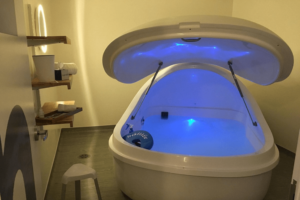
Float therapy involves lying inside a specially designed pod or room filled with water saturated with Epsom salt (magnesium sulfate). The water is heated to skin temperature around 93.5°F and the environment is completely dark and silent. The result is a state of near-total sensory deprivation where the outside world simply disappears.
Inside a tank sensory deprivation setup, your body becomes virtually weightless. There’s no gravity pulling on your spine, no pressure on your joints, no tension in your muscles. Your nervous system goes quiet. Your brain drops into a deeply relaxed theta wave state the same brainwave frequency found just before sleep.
This is flotation meditation in its truest form: effortless, passive, and profoundly restorative. Sessions typically run 60 to 90 minutes. First-timers often find the first 15 minutes take some getting used to, but most people fall into a deeply calm state within 20 to 30 minutes. The pods are fully sanitized between sessions, the water is filtered, and the environment is completely private.
The Science of Float Therapy and Muscle Recovery
Magnesium Absorption
The Epsom salt used in float therapy is rich in magnesium, a mineral that plays a critical role in muscle contraction, protein synthesis, and reducing inflammation. Many athletes are chronically low in magnesium due to heavy sweat loss during training. Floating in a magnesium-rich solution may help replenish these stores transdermally, supporting faster muscle fiber repair and reducing delayed onset muscle soreness (DOMS).
Cortisol Reduction
Hard training spikes cortisol, the body’s primary stress hormone. When cortisol stays elevated for too long, it actively breaks down muscle tissue and disrupts sleep, the two things every athlete needs most after a tough session. Research on float sensory deprivation consistently shows measurable drops in cortisol following sessions, helping the body shift out of a catabolic state and into a recovery-friendly, anabolic one.
The REST Effect
Clinically, float therapy is known as Restricted Environmental Stimulation Therapy REST. By stripping away all visual, auditory, and tactile input, the brain is freed from the enormous amount of energy it normally spends processing sensory information. The nervous system shifts from sympathetic dominance (fight-or-flight) to parasympathetic dominance (rest and digest). This is the exact physiological state the body needs to repair tissue, balance hormones, and restore energy reserves.
Pain Relief and Joint Decompression
The zero-gravity environment inside a tank sensory deprivation pod takes pressure off every joint, disc, and connective tissue in the body. Blood circulates more freely without having to fight gravity, delivering oxygen and nutrients to damaged muscle tissue while clearing out metabolic waste like lactic acid. Athletes dealing with overuse injuries, back pain, or general training fatigue often report immediate and significant relief during and after float sensory deprivation sessions.
Key Benefits for Athletes
- Reduced muscle soreness The combination of magnesium absorption and gravity-free rest dramatically cuts down recovery time between training sessions.
- Nervous system reset Deep flotation meditation gives your central nervous system a rare chance to fully decompress, which translates to better coordination, sharper focus, and faster reaction time on the field.
- Better sleep Lower cortisol plus deep theta wave induction equals more restorative sleep. Sleep is when the most critical muscle repair happens, and float therapy directly improves both sleep onset and sleep depth.
- Joint and spine relief Zero-pressure floating decompresses the spine and offloads every weight-bearing joint in the body. For athletes training heavy volume, this relief is invaluable.
- Mental performance The deeply meditative state achieved through sensory deprivation is used by elite athletes for visualization, mental rehearsal, and reducing performance anxiety. The mind matters as much as the body.
- Reduced inflammation Improved circulation, lower stress hormones, and physical unloading combine to bring down systemic inflammation markers over time with regular sessions.
Who Is Already Using It?
Float therapy and sensory deprivation recovery protocols have been openly embraced by NFL teams, NBA players, Olympic swimmers, and professional MMA fighters. Names like Tom Brady, Steph Curry, and Carl Lewis have all spoken about floating as part of their long-term performance and longevity strategy.
The reason is simple: the limiting factor in athletic performance is almost never training intensity it’s recovery quality. Float sensory deprivation directly upgrades recovery in ways that sleep, massage, and ice baths alone cannot fully achieve.
And you don’t need to be a professional to benefit. Recreational athletes, gym-goers, cyclists, and yoga practitioners across America are incorporating flotation meditation into their weekly routines and seeing real results.
Secret Soak Society USA
For athletes and wellness seekers ready to experience the full benefits of float therapy, Secret Soak Society USA offers premium float environments designed to maximize every minute of your session. With carefully maintained pods, purified salt water, and an atmosphere built for true recovery, it’s the kind of experience your body has been asking for.
How to Get the Most From Your Session
- Skip caffeine for at least four hours before floating. Stimulants work against the deep relaxation that makes float sensory deprivation so effective.
- Don’t eat heavily right before. A light meal one to two hours prior is ideal. Floating on a full stomach can be distracting.
- Shower beforehand. Most float centers require it, and it helps your body transition into the experience faster.
- Let go of the need to “do” anything. This is the hardest part for high-performing athletes. Float therapy is passive your only job is to stop working. Let the water, the salt, and the silence do the rest.
- Stay consistent. Like most recovery modalities, the benefits of flotation meditation compound over time. A single session is valuable, but a regular practice even once or twice a month produces noticeably greater results in soreness, sleep, and energy.
How Often Should Athletes Float?
For general recovery and stress management, once or twice a month is a solid baseline. During periods of heavy training load, competition prep, or injury recovery, weekly sessions can accelerate healing significantly. Most athletes notice a real shift after their third or fourth session as the body learns to reach deep relaxation faster.
Frequently Asked Questions
Q1. What does float therapy actually feel like?
Most people describe it as the deepest relaxation they’ve ever experienced. The first session can feel slightly disorienting at first, but within 20 to 30 minutes, the majority of floaters settle into a calm, borderless state of flotation meditation that feels unlike sleep, meditation, or anything else.
Q2. How long does it take to feel the recovery benefits of float therapy?
Many athletes notice reduced soreness and better sleep quality after their very first session. The deeper physical and neurological benefits of float sensory deprivation improved baseline inflammation, nervous system balance, and sustained performance typically built after three to five sessions.
Q3. How is float sensory deprivation different from regular meditation?
Traditional meditation requires mental effort and practice. Float sensory deprivation creates the conditions for a meditative state automatically, without requiring any prior experience. The absence of gravity, sound, and light essentially removes the obstacles that make meditation difficult for most people.
Q4. What should I wear during a float therapy session?
Most people float without a swimsuit, as clothing can create subtle distractions. Float pods are fully private, and nothing you wear affects the water or the experience negatively; it’s entirely your preference.
Q5. How often should athletes use flotation meditation for best results?
For athletes in active training, one session per week during high-load periods is ideal. For maintenance and general recovery, two sessions per month provides consistent benefits. Flotation meditation works best as a regular practice rather than a one-off event.



![[Quasi-drug] Bath Salt, Lemon Scent, 21.3 oz (600](https://m.media-amazon.com/images/I/716ZNtnKM-L._AC_UL320_.jpg)