

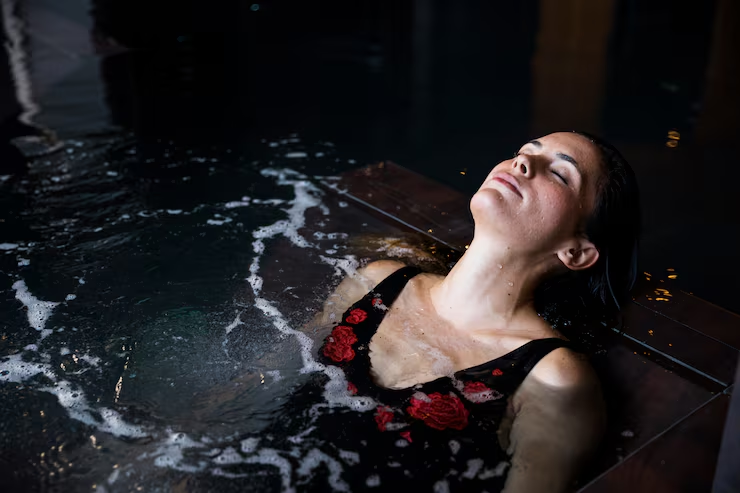
We live in a world that never really quiets down. Notifications, deadlines, screens, noise all adds up. And somewhere in the middle of all that, genuine rest has become almost impossible to find. That’s where Float Therapy comes in.
Unlike a nap or a spa visit, float sensory deprivation therapy creates something truly rare: an environment where your brain has absolutely nothing to react to. No light. No sound. No gravity pulling on your joints. Just you, floating weightlessly in warm water and finally, actual silence.
What Happens Inside a Float Tank?
A tank sensory deprivation session involves lying in a pod or room filled with water saturated with Epsom salt. The salt makes you float effortlessly, so there’s zero strain on your muscles or spine. The water is kept at skin temperature, the space is completely dark, and sound is blocked out entirely.Within minutes, something shifts. Your brain which is constantly scanning for threats, processing input, and managing your environment simply has nothing left to do. So it slows down.
This leads to what scientists call theta brainwave activity, the same deep mental state experienced during meditation or the edge of sleep. The difference? Experienced meditators spend years learning to reach theta. In sensory deprivation, it happens on its own.
Why Your Nervous System Loves This
Most people spend the majority of their day in sympathetic mode, the “fight or flight” state your body uses when it senses pressure or danger. Chronic stress, constant connectivity, and even background noise keep you locked there longer than your body was ever designed to handle.
Recovery requires the opposite: the parasympathetic “rest and restore” state. Float Therapy gets you there faster than almost anything else, for one simple reason it removes every single demand on your senses at once.
Here’s what’s actually happening during a session:
- Your brain finally slows down: With no input to process, brainwaves naturally drift into theta territory. People often describe it as the first time in years their mind went genuinely quiet.
- Physical tension melts away: The buoyancy of the Epsom salt solution takes all pressure off your joints, muscles, and spine. When your body stops holding tension, your nervous system gets the message: it’s safe to relax.
- Magnesium absorbs through your skin: Epsom salt is packed with magnesium sulfate, a mineral that directly supports nerve function, reduces inflammation, and helps regulate the chemicals that affect your mood and sleep. You absorb it passively, just by floating.
- Meditation happens without effort: For people with anxiety, racing thoughts, or burnout, traditional meditation is hard the world keeps interrupting. In a flotation meditation environment, there’s nothing to interrupt. The meditative state isn’t something you achieve. It just happens.
What It Does for Mental Health
The research on float sensory deprivation and mental health is genuinely encouraging, particularly around anxiety and depression.
For anxiety, which is largely driven by overstimulation, removing all stimulation at once gives the nervous system a full reset. Over time, regular sessions actually help retrain how your body responds to stress so the calm you feel in the tank starts to carry over into everyday life.
For depression, floating reduces cortisol (your primary stress hormone) while naturally supporting the production of dopamine and serotonin. Many people walk out of even their first session feeling noticeably lighter, not just relaxed, but genuinely more hopeful.
There’s also something deeper happening emotionally. The body stores stress in physical ways tight shoulders, shallow breathing, a clenched jaw. The deep parasympathetic state during floating gives those patterns a chance to release. People often describe it less like relaxation and more like an emotional reset.
Common things people report after a session:
- A noticeably quieter mind
- Feeling emotionally balanced rather than reactive
- Less physical tension in the body
- Better sleep that night
- A sense of clarity or lightness they hadn’t felt in a while
Physical Recovery Matters Too
The mental benefits don’t exist in isolation. Float Therapy has a real impact on the body as well. Many people actually fall asleep during their session the brainwave patterns inside the sensory deprivation tank are that close to deep sleep. For anyone struggling with insomnia, this alone can help break a difficult cycle.
Athletes regularly use float sessions to reduce inflammation, release muscle soreness, and speed up recovery after hard training. But you don’t have to be an athlete to feel the physical difference. If you carry stress in your body, tight neck, headaches, back tension the combination of weightlessness and magnesium absorption tends to bring significant relief.
How It Compares to Other Methods
Yoga, breathwork, and meditation are all genuinely valuable. But none of them fully remove you from your environment. Your nervous system is still partially engaged, still registering sounds, balancing your body, and responding to the room around you.
Float Therapy removes the environment itself.
That’s a meaningful difference. Instead of trying to calm your mind within the noise of daily life, you step outside of it completely. The result is a deeper, faster, and more thorough reset than most people have experienced through any other method.
How Often Should You Float?
A single session is enough for most people to notice a real difference. But lasting changes particularly for anxiety, burnout, or chronic stress tend to come with consistency.Starting with one to two sessions per week gives your nervous system time to build a new baseline. Once that balance is established, many people find that monthly flotation meditation sessions are enough to maintain it. Wellness practitioners increasingly recommend Float Therapy not as a luxury, but as a practical tool for managing mental health especially for people dealing with ongoing stress, anxiety, or emotional exhaustion.
The Bottom Line
Your body already knows how to heal itself. The problem is that modern life rarely gives it the conditions to actually do that.
Sensory deprivation Float Therapy creates those conditions completely and efficiently. It removes the noise, the gravity, the stimulation, and the demands, and gives your nervous system the one thing it can’t find anywhere else: genuine silence.
For anyone looking for a natural, drug-free way to feel like themselves again, floating is worth taking seriously.





![[Quasi-drug] Bath Salt, Lemon Scent, 21.3 oz (600](https://m.media-amazon.com/images/I/716ZNtnKM-L._AC_UL320_.jpg)