

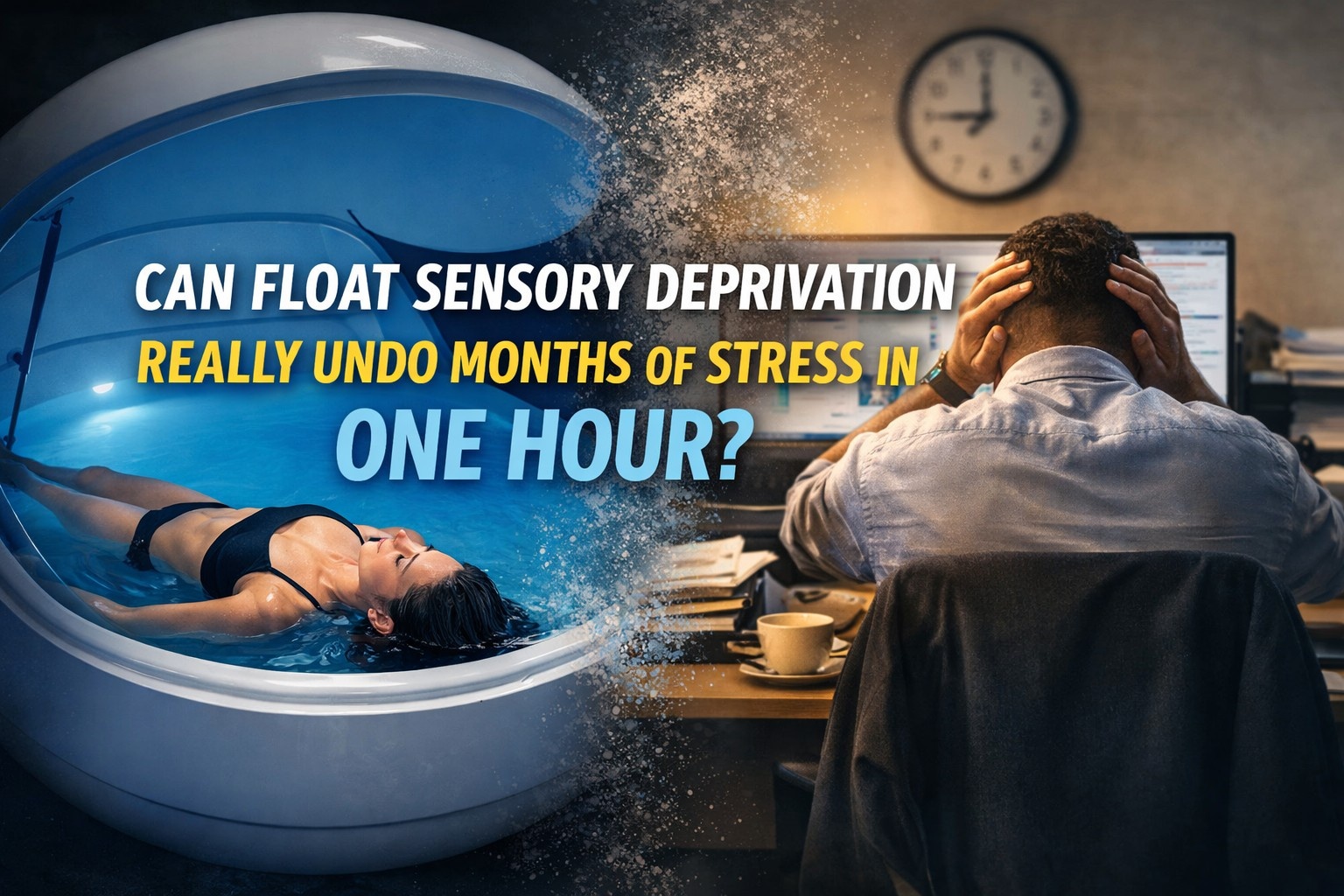
It sounds too good to be true. One hour in a dark, quiet tank and somehow the weight of months, the deadlines, the sleepless nights, the tension that has been living in your shoulders for longer than you can remember just lifts. Most people hear that claim and respond with healthy skepticism. And that skepticism is fair. But the science behind Float sensory deprivation tells a story that is surprisingly difficult to argue with.
The short answer is no 60 minutes cannot erase every consequence of prolonged stress as if it never happened. But the longer, more honest answer is that a single float therapy session can interrupt the stress cycle at a physiological level in ways that most people have never experienced through any other means. And that interruption is where real recovery begins.
What Months of Stress Actually Does to Your Body
Before understanding what floatation therapy can reverse, it helps to understand what chronic stress actually builds up inside you. When cortisol floods your system consistently over weeks and months, here is what accumulates:
- Immune function suppresses your body’s ability to fight illness and repair itself quietly weakens the longer stress hormones stay elevated
- Sleep architecture breaks down you stop reaching the deep, restorative sleep stages your body depends on for genuine overnight recovery
- Inflammation increases chronic cortisol keeps inflammatory markers elevated, contributing to physical pain, stiffness, and long-term health risk
- Muscles stay permanently tightened especially through the neck, shoulders, jaw, and lower back where most people silently carry their stress load
- The brain rewires toward threat detection the nervous system stops distinguishing between real danger and everyday pressure, keeping your alert system permanently switched on
- Ordinary rest stops being enough weekends, holidays, and normal sleep can no longer fully restore what sustained stress has been steadily depleting
What the Tank Does That Nothing Else Can
Inside a sensory deprivation tank, every external trigger that keeps your stress response running is removed at once. No light. No sound. No physical pressure. No temperature awareness. The skin-temperature water and high Epsom salt concentration of a true liquid sanctuary create an environment where your nervous system receives a message it has not received in months there is genuinely nothing to respond to right now.
And the body believes it. Heart rate slows. Breathing deepens. The postural muscles that have been quietly bracing against everything finally release. Cortisol levels begin dropping measurably within the first 20 to 30 minutes research consistently shows reductions of 20 to 30 percent in a single session. For a nervous system that has been running on high alert for months, that drop is significant. It is not gradual unwinding. It is a hard, biochemical shift into restoration mode.
The Brain Resets at a Frequency Stress Blocks
 One of the most compelling pieces of science behind float session therapy involves brainwave activity. Chronic stress keeps the brain locked in high beta, the fast, reactive frequency of constant processing and threat assessment. Getting out of beta requires the kind of genuine, total stillness that modern life almost never provides.
Inside the isolation tank, with zero sensory input arriving, brainwaves slow naturally into alpha and then theta the deeply restorative frequencies associated with emotional processing, memory consolidation, and subconscious repair. Theta is where the brain actually works through accumulated stress rather than just sitting on top of it. Most people only touch theta briefly while falling asleep. Floatation therapy creates conditions where the brain holds theta for an extended, uninterrupted period and that access to theta is part of what makes people feel so genuinely different when they emerge.
One Session Versus Long-Term Recovery
Here is the honest part. One session of float sensory deprivation will not undo six months of burnout permanently. What it delivers instead is something equally valuable:
- A complete cortisol reset your stress hormone baseline drops for that day, giving your body a genuine chemical break from the sustained elevation driving most of your symptoms
- A nervous system reference point your body gets a real, full experience of what restoration actually feels like, something many stressed Americans have genuinely forgotten
- A broken stress cycle even one interrupted cycle creates space for the body to begin genuine recovery rather than continuing to layer stress on top of stress
- Progressive benefits with consistency people who float regularly report sleep improving week by week, anxiety dropping steadily, and physical tension returning less severely each time
- A maintenance system rather than a crisis fix regular float session therapy prevents stress from accumulating to breaking point rather than waiting until burnout arrives to address it
Final Thoughts
So can float sensory deprivation really undo months of stress in one hour? Not entirely but it can do something arguably more valuable. It can show your body what recovery actually feels like and give your nervous system the reset it needs to start genuinely healing rather than just surviving.
At Secret Soak Society, every float session therapy environment is designed to deliver that experience completely and immediately from your very first session. If your body has been running on empty for longer than it should, Secret Soak Society is where the reset begins.
FAQs
Q1. Can float sensory deprivation really reduce stress in just one session?
Yes, a single session measurably drops cortisol by 20 to 30 percent and shifts the nervous system out of chronic stress mode immediately.
Q2. How does a sensory deprivation tank help with long term stress?
It breaks the stress cycle at a physiological level, giving the body a complete reset that compounds into lasting relief with regular sessions.
Q3. How many float therapy sessions do you need to see real results?
Most people feel a significant difference after their first session, with deeper and more lasting results building consistently from the third session onward.
Q4. Is floatation therapy effective for burnout and exhaustion?
Yes, the isolation tank removes every demand on the nervous system simultaneously, delivering the kind of full system restoration that burnout recovery requires.
Q5. What makes float session therapy different from regular rest or sleep?
Unlike sleep, float session therapy actively removes all sensory input, drops cortisol, and holds the brain in theta a restorative state ordinary rest never reliably reaches.





![[Quasi-drug] Bath Salt, Lemon Scent, 21.3 oz (600](https://m.media-amazon.com/images/I/716ZNtnKM-L._AC_UL320_.jpg)