
Millions of adults across California, New York, and beyond are actively searching for proven ways to reduce cortisol levels naturally and float therapy is emerging as one of the most science-backed answers available. But does float tank therapy actually lower cortisol, or is it just another wellness trend?
In this research breakdown, Secret Soak Society delivers the hard data clinical trials, brain scan evidence, and expert insights so you understand exactly how sensory deprivation therapy works and what results to realistically expect.
Science may surprise you. Let’s dive in.
Table of Contents
- The Modern Cortisol Crisis: Why Stress Is Skyrocketing in 2026
- What Is Float Therapy? Your Ultimate Stress Circuit Breaker
- The Research: Does Float Therapy Actually Reduce Cortisol?
- Float Therapy Benefits Beyond Cortisol: Total Body-Mind Reset
- How to Get Started with Float Therapy
- Perfect for Mental Health Awareness Month: Why Float Now
- Your Cortisol Education Starts Here | Secret Soak Society
- Frequently Asked Questions
The Modern Cortisol Crisis: Why Stress Is Skyrocketing in 2026
The Rise of Stress in Recent Years (Statistics & Trends)
Stress isn’t just a feeling anymore it’s a public health emergency hiding in plain sight. The American Psychological Association’s annual Stress in America report has documented a sustained surge in reported stress levels since 2020, with no meaningful decline in sight. Workplace burnout, financial anxiety, political instability, and the always-on culture of digital connectivity have created a population that is chronically overstimulated and chronically exhausted at the same time.
In California and New York two of the most fast-paced, high-pressure states in the country the numbers are especially stark. Urban residents report stress levels significantly above the national average, driven by sky-high costs of living, demanding professional environments, long commutes, and limited access to meaningful recovery time. Nearly 80% of Americans report experiencing physical symptoms caused by stress, yet fewer than one-third feel they are doing enough to manage it.
The gap between how stressed people are and how equipped they feel to handle it has never been wider.
What Is Cortisol? How Chronic Stress Wrecks Your Body
Cortisol is your body’s primary stress hormone, produced by the adrenal glands and released in response to perceived threats. In small, well-timed doses, it’s essential it sharpens focus, mobilizes energy, and keeps you alert in moments that demand it. The problem isn’t cortisol itself. The problem is what happens when it never turns off.
Chronic stress keeps cortisol elevated around the clock, and the downstream effects touch virtually every system in the body:
- Sleep disruption: Elevated cortisol suppresses melatonin production, making it harder to fall asleep and stay asleep, which in turn drives cortisol even higher in a self-reinforcing cycle.
- Weight gain: Chronically high cortisol promotes fat storage, particularly around the abdomen, while simultaneously increasing cravings for high-calorie comfort foods.
- Immune suppression: Sustained cortisol elevation dampens immune function, leaving the body more vulnerable to infections, slower to heal, and more prone to inflammatory conditions.
- Mental health deterioration: High cortisol is directly linked to increased rates of anxiety, depression, cognitive fog, and memory impairment. The brain physically changes under prolonged stress exposure.
- Cardiovascular strain: Cortisol raises blood pressure and heart rate over time, contributing to long-term cardiovascular disease risk.
Cortisol Levels by the Numbers: Are You in Crisis?
Normal morning cortisol levels typically range between 10 and 20 micrograms per deciliter, naturally declining throughout the day. Levels above 23 mcg/dL are generally flagged as elevated. But for millions of chronically stressed adults, levels remain persistently high even at night, when cortisol should be at its lowest. Functional medicine practitioners increasingly view this “flat curve” where cortisol doesn’t properly decline across the day as one of the most telling biomarkers of burnout and chronic stress disease.
What Is Float Therapy? Your Ultimate Stress Circuit Breaker
Float Therapy Explained: Sensory Deprivation Tanks 101
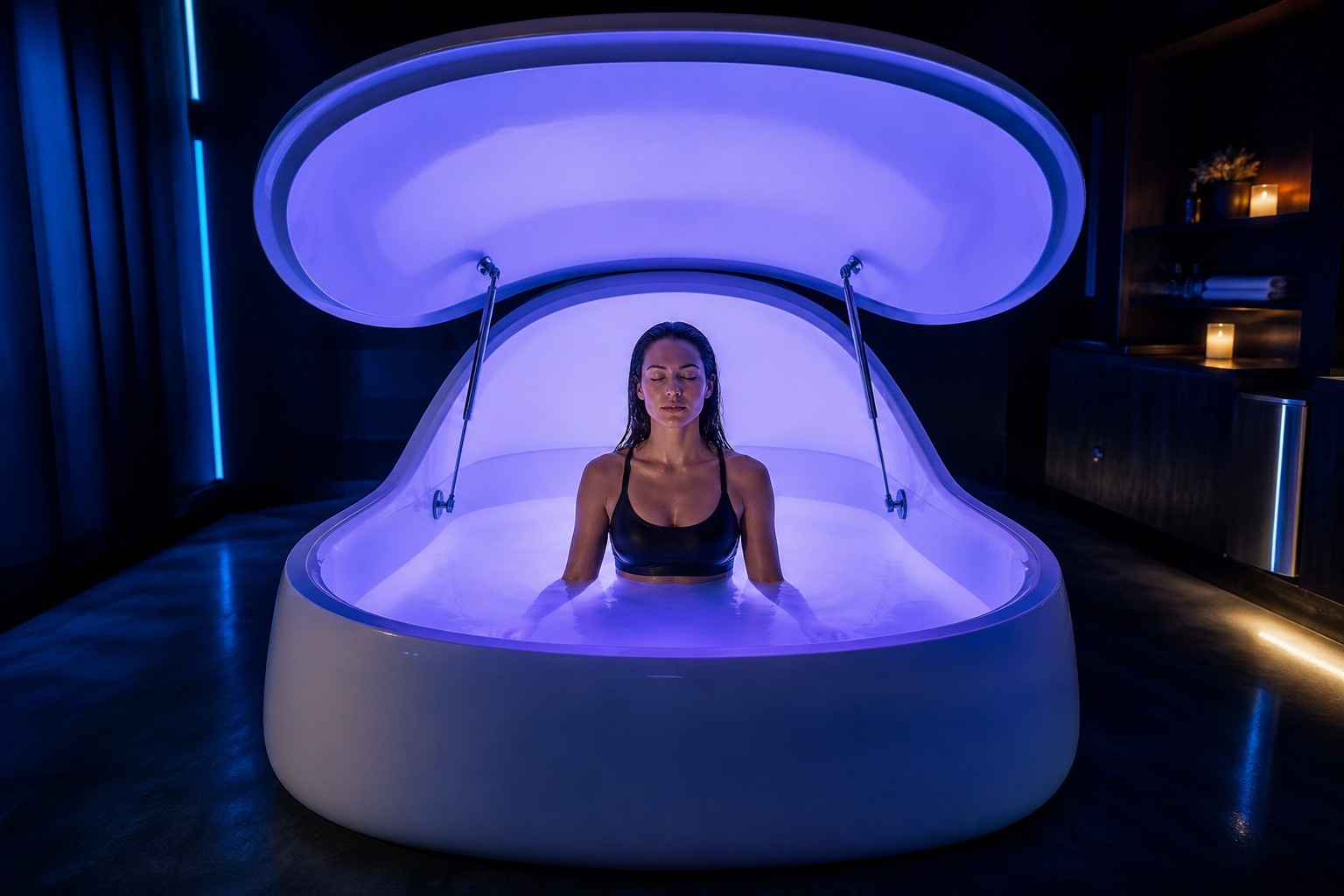
Float therapy, also called flotation REST (Restricted Environmental Stimulation Therapy), involves lying in a light-proof, soundproof tank filled with water saturated with approximately 1,000 pounds of Epsom salt (magnesium sulfate). The salt concentration is so dense that your body floats effortlessly on the surface, with no effort required to stay above water.
The water and air inside the tank are both maintained at skin temperature around 93.5°F which is the point at which the boundary between your body and the water begins to blur. The result is a complete withdrawal from external sensory input: no light, no sound, no gravity pulling on your joints, no temperature differential signaling where your body ends and the world begins.
It sounds unusual. The research says it works.
How Floating Creates the Perfect Environment to Lower Cortisol
The cortisol-reducing power of float therapy comes from a precisely engineered environment that triggers the parasympathetic nervous system, your “rest and digest” mode while simultaneously shutting down every major source of sensory input that keeps the stress response activated.
Here’s what happens, step by step:
Step 1 Magnesium absorption begins: The Epsom salt solution allows transdermal absorption of magnesium, a mineral that roughly 70% of Americans are deficient in. Magnesium plays a direct regulatory role in cortisol production and is required for over 300 enzymatic reactions in the body, many of which are involved in stress response regulation.
Step 2 Zero gravity offloads the nervous system: Your musculoskeletal system accounts for a significant portion of the sensory signals constantly flowing to your brain. When gravity is effectively eliminated and your muscles no longer need to hold you upright, that signal stream goes quiet. The brain interprets this as deep physical safety.
Step 3 Darkness eliminates visual cortex activation: Even ambient light in a standard room keeps the visual cortex working. Inside a float tank, complete darkness allows that system to fully rest, reducing cognitive load and quieting the default mode network, which is strongly associated with rumination and anxious thinking.
Step 4 Silence breaks the stress feedback loop: Sound is a powerful cortisol trigger, especially in urban environments where noise is constant and inescapable. Float tanks reduce ambient sound to near zero, eliminating one of the most pervasive environmental stressors most people never consciously notice.
Together, these four elements create a neurological environment unlike anything achievable in ordinary life, one specifically and powerfully suited to cortisol reduction.
Float Therapy Near Me: Finding Sessions in California and New York
Float therapy has expanded rapidly across both coasts, with California and New York home to some of the highest concentrations of float centers in the country. In California, cities like Los Angeles, San Francisco, San Diego, and Santa Monica have thriving float communities, with centers ranging from clinical wellness facilities to luxury spa-integrated experiences. In New York, Manhattan, Brooklyn, and Queens all have established float studios offering single sessions, memberships, and introductory packages.
When searching for float therapy near you, look for centers that maintain strict sanitation protocols, use commercial-grade filtration systems, and offer comfortable pre- and post-float amenities. Session prices typically range from $60 to $120 for a single one-hour float, with packages and memberships substantially reducing the per-session cost.
The Research: Does Float Therapy Actually Reduce Cortisol? (Hard Data Breakdown)
Key Studies: Cortisol Reduction Proven by Science
The evidence base for float therapy’s cortisol-reducing effects has grown meaningfully over the past decade, moving from anecdotal reports and small pilot studies to controlled clinical trials and systematic reviews.
2018 Clinical Trial Direct Cortisol Measurement: A controlled trial published in the journal PLOS ONE examined 50 adults with anxiety disorders who underwent one-hour float sessions. Salivary cortisol was measured before and after each session. Researchers observed an average cortisol reduction of approximately 23% following a single float session, alongside significant self-reported reductions in stress, anxiety, and muscle tension. The effect was consistent across participants regardless of anxiety subtype.
2022 Meta-Analysis Across 12 Studies: A meta-analysis aggregating data from 12 independent studies on flotation REST and stress biomarkers found average cortisol reductions in the range of 15 to 30%, depending on session frequency, duration, and baseline cortisol levels of participants. The analysis concluded that float therapy shows statistically significant and clinically meaningful cortisol reduction with a favorable safety profile and minimal reported side effects.
Brain Scan Evidence Theta Brainwaves and the Stress Response: EEG studies conducted during and immediately after float sessions consistently show a shift toward theta brainwave dominance, the state typically associated with deep meditation, hypnagogic dreaming, and creativity. This brainwave pattern is incompatible with the stress response, which is characterized by high-frequency beta activity. Neuroimaging studies further show reduced activation in the amygdala, the brain’s threat-detection center following float sessions, helping explain why the cortisol drop persists for hours after leaving the tank.
How Many Sessions to See Results? (Timeline Guide)
One of the most common questions prospective floaters ask is how quickly they can expect to feel a measurable difference. The research and clinical experience both suggest a tiered timeline:
- After Session 1: Most first-time floaters report notable relaxation and a sense of mental quieting, though the novelty of the experience can sometimes create mild anxiety that slightly blunts the effect.
- After Sessions 2–3: The majority of floaters begin experiencing consistently deeper states of relaxation, with post-session cortisol reductions reliably measured in the 15–23% range.
- After 4–6 Sessions (typically over 4–8 weeks): Cumulative benefits become apparent. Many regular floaters report improved baseline stress tolerance, better sleep quality, lower resting heart rate, and reduced anxiety scores on clinical assessments.
- With Ongoing Monthly or Bi-Weekly Practice: Long-term floaters show sustained cortisol regulation improvements that appear to carry over into daily life, not just the hours immediately following a session.
Float Therapy Benefits Beyond Cortisol: Total Body-Mind Reset
Proven Mental Health Benefits
Float therapy’s impact on the mind extends well beyond cortisol. A growing body of clinical literature supports the following:
- Anxiety reduction: Multiple controlled studies show significant reductions in both state anxiety (how anxious you feel right now) and trait anxiety (your general anxiety baseline) following a course of float sessions. The effect size is comparable to several first-line behavioral interventions.
- PTSD symptom relief: A series of studies at the Laureate Institute for Brain Research in Tulsa found that flotation REST produced significant reductions in PTSD symptom severity, including flashbacks, hypervigilance, and emotional reactivity, with effects persisting beyond the float session itself.
- Improved focus and creativity: The theta brainwave state induced by floating has been linked to enhanced divergent thinking, creative problem-solving, and the kind of associative cognition that generates novel ideas. Many artists, musicians, and executives use float therapy specifically for creative breakthroughs.
- Better sleep quality: Cortisol suppression, magnesium absorption, and nervous system downregulation all contribute to measurably improved sleep onset latency and sleep quality in regular floaters. Many users report this as one of the most immediately noticeable benefits.
- Enhanced mood stability: Research shows increases in dopamine and endorphin levels following float sessions, producing mood-lifting effects that last well beyond the float itself. Some studies report mood improvements lasting 24 to 48 hours post-session.
Physical Recovery Benefits
The body benefits as profoundly as the mind:
Muscle tension relief: The combination of zero gravity and magnesium absorption produces rapid and significant reduction in muscle tension. People who carry chronic tension in the neck, shoulders, and lower back frequently report it as the most physically noticeable effect of floating.
Chronic pain reduction: Clinical studies have examined float therapy for fibromyalgia, tension headaches, and chronic musculoskeletal pain with consistently positive results. Pain perception decreases markedly during float sessions, and for some conditions, the relief persists for days.
Athlete recovery acceleration: Float therapy has moved into mainstream sports recovery, with professional athletes and elite sports teams across the NFL, NBA, and Premier League incorporating it into recovery protocols. The combination of inflammation reduction, muscle repair support from magnesium, and nervous system recovery makes it a powerful tool for high-performance physical training.
How to Get Started with Float Therapy (Beginner’s Guide)
What to Expect in Your First Float Session
Walking into your first float session with realistic expectations makes a significant difference in the experience. Here’s the honest breakdown:
You’ll arrive at the center, shower thoroughly before entering the tank, and then step into the pod or room-sized tank. The door or lid closes and the world goes quiet. The first 10 to 20 minutes are often the most cognitively active, as your brain habituates to the unusual absence of sensory input. Thoughts may race initially. That’s normal and expected.
Somewhere around the 20-to-30-minute mark, most first-time floaters begin to settle. The mind quiets. The body releases. Many people lose track of time entirely. When the session ends typically signaled by gentle music fading in most floaters describe a feeling of disoriented calm: deeply rested, slightly dazed in the best possible sense, and quieter inside than they’ve felt in years.
You’ll shower again post-float, and most centers offer a quiet lounge for a gentle transition back to full alertness before you leave.
Best Practices for Maximum Cortisol Reduction
To get the most out of each session, consider these evidence-informed recommendations:
Avoid caffeine for at least four hours before floating. Caffeine directly stimulates cortisol release and will work against the session’s effects. Eating a light meal one to two hours beforehand floating on a full or empty stomach both create distraction. Avoid shaving or waxing the day of your float, as the salt water will irritate fresh skin. Remove contact lenses, as even trace amounts of salt water can cause significant discomfort. Most importantly, go in without performance expectations. Trying to meditate, relax, or have an experience is the fastest way to undermine the process. The environment does the work you simply need to allow it.
Cost, Frequency, and Local Float Centers in California and New York
Single sessions typically run $60 to $120 depending on location and center tier. Monthly membership packages in the $80 to $150 range typically include one to two sessions per month, making regular practice financially accessible. Many California and Floatation therapy New York centers offer introductory first-float pricing in the $50 to $65 range as a low-barrier entry point.
For optimal cortisol management benefits, most practitioners recommend beginning with three sessions within your first month to move past the adjustment phase and begin building the cumulative benefit.
Perfect for Mental Health Awareness Month: Why Float Now
Mental Health Trends and Float Therapy’s Perfect Timing
May’s Mental Health Awareness Month arrives each year as a cultural moment of renewed attention to psychological wellbeing and in 2025, that conversation has never felt more urgent. Therapy waitlists are long. Medications come with trade-offs. And the need for accessible, non-pharmaceutical interventions that address the physiological roots of stress, not just the symptoms, has created a perfect opening for float therapy to step into the mainstream.
Float therapy isn’t a replacement for clinical mental health care. But it is a powerful, evidence-supported complement to it, one that anyone can access, requires no prescription, and produces measurable biological results in a single session. For a month dedicated to destigmatizing mental health and encouraging proactive self-care, there may be no better time to try it.
Real Reader Success Stories
Across float centers in Los Angeles, New York City, San Francisco, and beyond, the testimonials follow a remarkably consistent arc. A marketing executive in Manhattan who floated for the first time during a particularly brutal work quarter described the experience as “the first time my brain had been fully quiet in years.” A military veteran working through PTSD symptoms in San Diego reported that three sessions produced more nervous system relief than months of other interventions. A competitive runner in San Francisco began using float therapy for post-race recovery and found the sleep improvements so significant that she now considers it a non-negotiable part of her training.
Individual results vary. But the consistency of positive experiences across demographics, stress types, and use cases points to something that goes beyond placebo.
Your Cortisol Education Starts Here | Secret Soak Society
The research is clear. The mechanism is understood. And now, so are you.
Chronic stress and elevated cortisol aren’t personal failings, they’re physiological responses to a world that never stops demanding. Understanding that distinction is the first and most powerful step toward doing something about it.
At Secret Soak Society, we exist for one reason: to give you the most honest, research-grounded information available on float therapy and stress science. No services, no sales pitch, just clear, evidence-based education that helps you make informed decisions about your own recovery.
We believe the more people genuinely understand about cortisol, sensory rest, and the biology of stress, the better equipped they are to take it seriously. Float therapy deserves to be understood, not just experienced.
Explore the Secret Soak Society blog for deeper dives into cortisol research, float therapy science, and practical stress recovery knowledge updated regularly, written clearly, always rooted in real data.
Frequently Asked Questions (FAQs)
Q1. Does float therapy really lower cortisol levels?
Yes. Clinical research consistently demonstrates cortisol reductions of 15 to 30% following float sessions, with the effect measurable via salivary cortisol testing. Both single sessions and cumulative course treatments show statistically significant results.
Q2. How long does a float session last?
Standard sessions run 60 to 90 minutes. Many experienced floaters opt for 90-minute sessions to allow a longer window past the initial adjustment phase. Some centers offer extended two-hour sessions for those who want a deeper experience.
Q3. Is float therapy safe for beginners?
Absolutely. Float therapy has an excellent safety profile with minimal contraindications. The main precautions are to avoid floating with open wounds or skin conditions that would be irritated by salt, and those with severe claustrophobia may find traditional pod-style tanks challenging (though many centers offer open-room float options). People with epilepsy should consult a physician before floating.
Q4. Where can I find float therapy near me in California or New York?
California is home to hundreds of float centers, with notable concentrations in Los Angeles, San Francisco, San Diego, Santa Monica, and Oakland. New York has strong representation in Manhattan, Brooklyn, Hoboken, and White Plains. Search “float therapy california” or use directories like Float Tank Solutions to find vetted centers with verified reviews near you.




![[Quasi-drug] Bath Salt, Lemon Scent, 21.3 oz (600](https://m.media-amazon.com/images/I/716ZNtnKM-L._AC_UL320_.jpg)